
The five fundamentals of reliable cell therapy manufacturing
7 MIN READ

Jason Jones
Head of Global Business Development
In cell therapy manufacturing, production reliability isn't simply a quality metric to be optimised. It’s the likelihood of a life-changing therapy reaching the patient waiting for it.
At clinical production volumes, reliability relies on people: experienced operators, close supervision and careful documentation. But as production volumes rise, the number of batches, parallel runs, shifts, operators and handovers all increase together - every one of them a source of variance that could risk the quality or consistency of output.
So, the question facing developers and CDMOs is how to maintain and strengthen manufacturing reliability as production scales through automation.
We believe the answer is to design for reliability from the outset, around five fundamentals: precise process execution, complete traceability, efficient workflows, the ability to absorb disruption, and a robust supply chain. Constellation® was built around these requirements from the start.
1. Precise execution of the biological process
Every cell therapy has a precisely defined process: a validated sequence of unit operations, each with its own parameters. How closely that process is followed in the lab is the first fundamental of manufacturing reliability. The goal is a process that runs identically on a Tuesday morning in the first week of production and on a night shift eighteen months later. The exact process you designed, executed exactly as intended, for every batch.
Manual execution of these operations contains some variability by its nature. The interval between two steps drifts by a minute, a transfer technique differs subtly between two operators: natural consequences of doing precise work by hand, repeatedly, with time pressure.
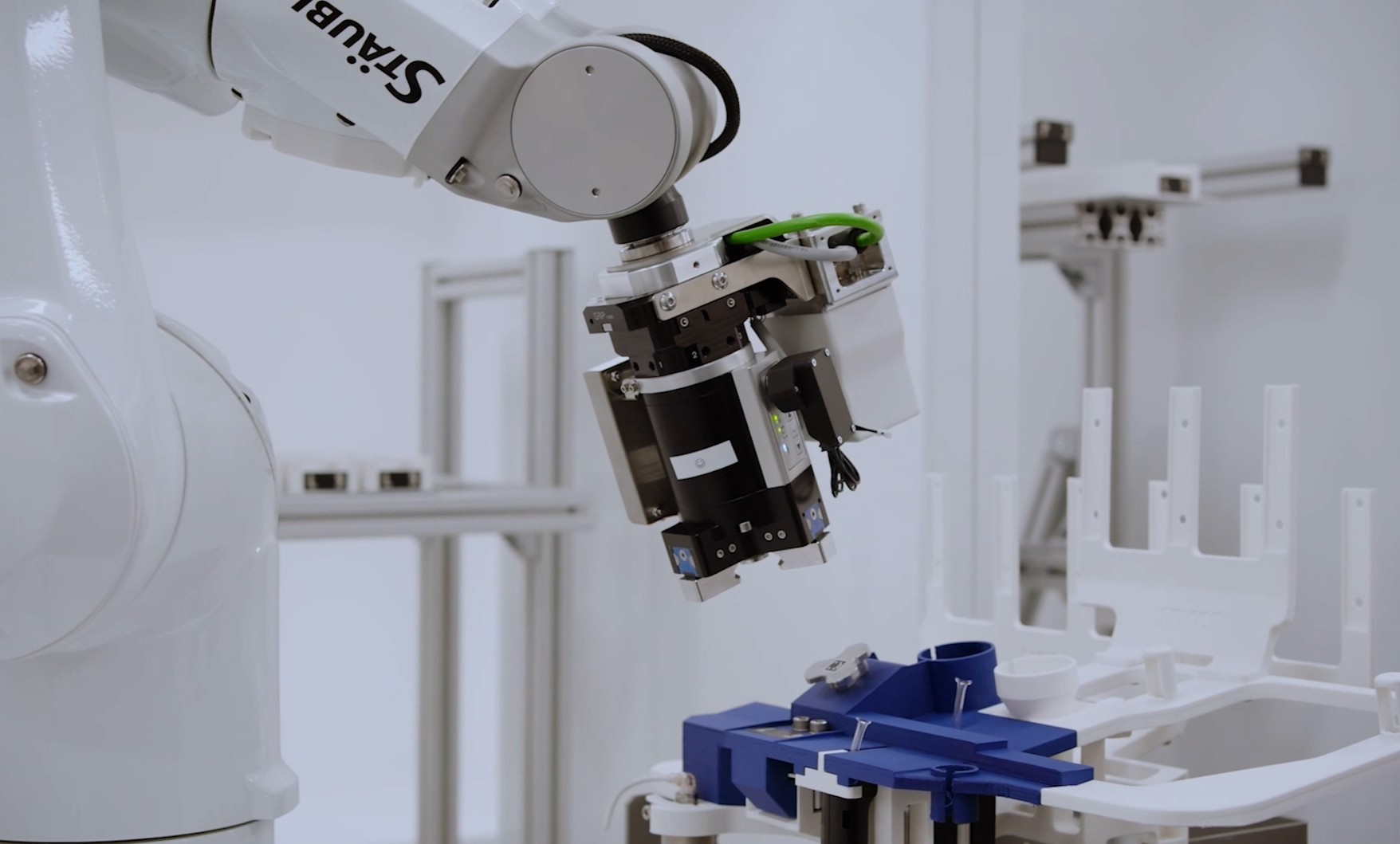
With cell therapy manufacturing automation, we have the opportunity to execute with a higher level of standardisation and repeatability: movement of cell material controlled and repeatable, timescales managed to the second.
Constellation was designed with this level of precision in mind. Critically, it automates the exact process you have already developed and validated: each manufacturing step executed as a robotic routine programmed to defined parameters, with precise, repeatable movement and timing. This reduces sources of operator-specific variation, resulting in the precise execution of the biological process you designed, exactly as it is designed, every time.
2. Complete traceability and automatic documentation
A batch is not safe to release simply because it was manufactured correctly. It is safe to release because you can demonstrate that it was. That is why process traceability is the second fundamental of reliable cell therapy manufacturing.
Reliable production output relies on a chain of identity and chain of custody that hold from apheresis through to infusion, across every transfer, container and handover. Building that evidence is labour-intensive work, and in most manufacturing environments it still depends heavily on manual recording and transcription - which carries an administrative burden and the risk of inconsistency and omission.
In designing Constellation, we saw an opportunity to go beyond reducing paperwork and make traceability an automatic component of manufacturing execution - creating clear, consistent operational visibility as manufacturing happens.
Constellation® was therefore designed to require minimal manual documentation. The system automatically captures each manufacturing step, down to each individual action and material transfer. Records are captured in electronic batch records designed to meet 21 CFR Part 11 requirements, and the system can integrate with a developer's existing MES. That means you:
- reduce the risk of human error in manual transcription;
- reduce the labour required to produce and check records; and
- maintain detailed, accurate documentation at every step.
The result is documentation that is both more reliable and easier to evidence as such.
3. Efficient workflows through intelligent orchestration
Reliable execution at scale is not only about what happens at an individual workstation. It also depends on how time-dependent activities, instruments, robots and batches are coordinated across the manufacturing environment.
Constellation uses unified digital orchestration to coordinate scheduling, fleet management and robotic path planning across the facility. Using live system state and resource availability, it can determine how available capacity should be deployed as manufacturing progresses. This helps prevent avoidable bottlenecks and conflicts while allowing multiple processes to run in parallel and equipment to be used more productively.
At scale, reliable cell therapy manufacturing depends not just on repeating individual tasks accurately, but on coordinating the whole operation reliably.
4. Ability to absorb disruption
At higher volumes, reliability stops being purely a question of repeatability and becomes a question of resilience. Demand fluctuates. Instruments need servicing. Staff turn over. The real test of a manufacturing operation is not whether conditions change around it, but whether batches keep moving when they do.
So how do you build resilience into cell therapy manufacturing? The conventional answer is redundancy through duplication: spare manufacturing infrastructure and surplus labour held in reserve. It works, but it is an expensive way to buy resilience, and it consumes cleanroom space.
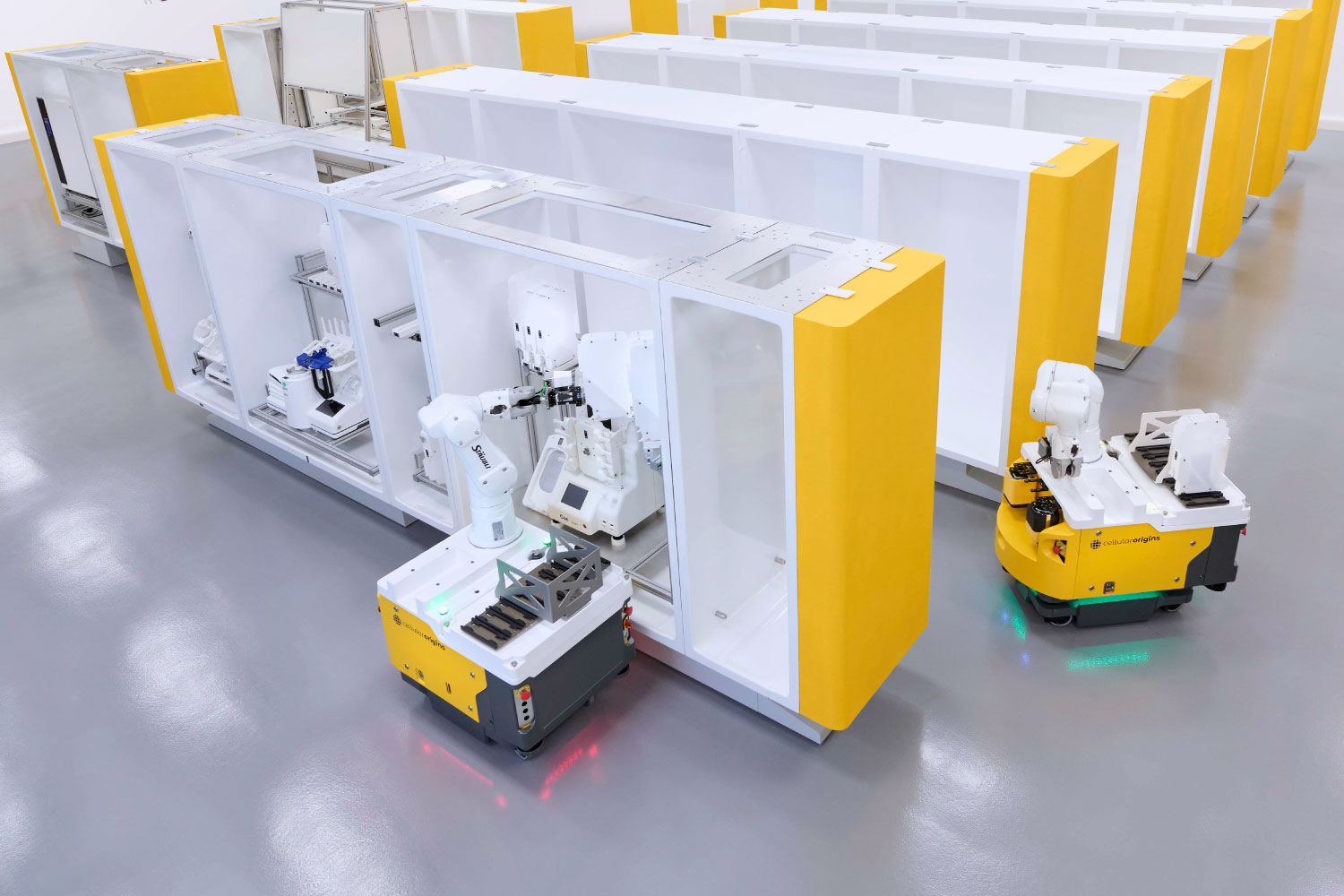
Constellation is built on a more efficient principle. In a Constellation manufacturing environment, each manufacturing step can be performed by any of several mobile robots, at any of several workstations - rather than being tied to a fixed production line. If an instrument or robot becomes unavailable, workflows are simply reassigned across available resources in real time to adapt.
This is the job of Constellation's orchestration layer, which coordinates scheduling, fleet management and robotic path planning across the facility. It reads live system state and resource availability to determine how best to deploy the capacity that is actually available at that moment.
Resilience therefore derives from flexibility in how manufacturing resources are allocated, not from holding duplicate capacity idle. The operation can adapt around as conditions change, to maintain production continuity.
5. Robust supply chain
The final fundamental is supply chain resilience, because reliable manufacturing depends on reliable access to the materials, consumables and support services that keep the process running.
In cell therapy, the cost of changing any input once it is written into a validated process is high, and switching costs are compounded by the change control and regulatory work that follows. Supply chain dependencies therefore need to be considered alongside the manufacturing architecture itself.
This is where automation decisions can quietly create or minimise risk. A platform that requires proprietary consumables concentrates a developer's supply chain into a single vendor. Constellation was designed instead to integrate proven third-party bioprocessing instruments and their established consumables, so developers can scale an established process without unnecessary change.
Through co-supply relationships with partners such as Cytiva and Fresenius Kabi, consumables continue to come directly from instrument providers, rather than requiring a move to a proprietary ecosystem.
Learn more about our partnerships.
This reduces the potential points of failure that are carried by the system, to promote overall reliability.
Individually, each of these factors strengthens manufacturing reliability. Together, they determine whether that reliability can be sustained as batch numbers, operational complexity and production demands increase.
That is why reliability at scale cannot be treated as something to retrofit to your manufacturing operation late. It needs to be designed into the manufacturing operation from the outset - into how processes are executed, resources coordinated, and disruption managed.
Constellation® was built around these requirements from the start: to deliver reliable cell therapy manufacturing at scale, while preserving the biology, process and tools you already trust.
Reliable as production scales; resilient when conditions change. Because every patient matters.
Ready to scale reliably?
You've developed a therapy that works. The next challenge is a manufacturing operation that can deliver it consistently, at the volumes you're planning for, for as long as patients need it.
Talk to our team about your process, your capacity requirements and your route to commercial scale.
We'll be in touch!
The Constellation® platform.
Constellation is a fully automated robotic platform enabling flexible, low-risk manufacturing expansion for autologous and allogeneic cell therapies. It integrates seamlessly with validated GMP instruments and consumables, to preserve biological performance, with digital orchestration for real-time monitoring and full traceability.
Automate your cell therapy manufacturing with confidence and achieve greater throughput, consistency, and operational efficiency at lower costs.